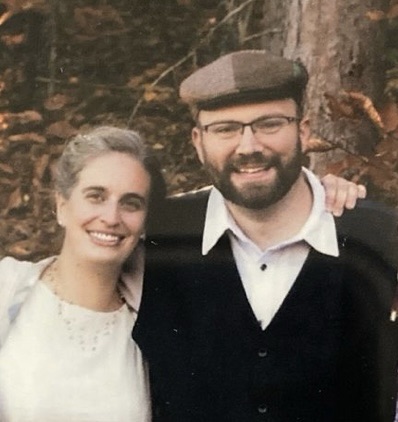
One of the things that my husband Alec and I have in common is an ability to latch onto patterns, recognize when something isn’t working optimally, and develop a plan to rectify it. We are both problem solvers.
Alec does this professionally through his work as a National Groundwater Association Certified Pump Installer. He installs, diagnoses, and repairs water well pumps for homeowners and businesses. This involves spending a lot of time in basements, crawl spaces, and ditches; measuring AMPs and ohms with a multimeter and timing water output to calculate gallons per minute. He comes home and tells me about the pressure tanks, check valves, cutoff switches that he encountered that day. It’s a job that he loves – not only for the technical challenges, but because he is saving someone’s day each time he shows up to a call. When he leaves, they can finally sigh with relief and head for that shower they have been waiting to take.
I solve problems professionally too. Originally, it was fixing injuries – my first job was providing sideline first-aid as a student athletic trainer. Then, I moved onto orthotics and prosthetics and I found some flaws in that field that I thought could be solved with additional research, so I did a PhD.
While in grad school, I taught biomechanics and functional anatomy to students who would one day be physical and occupational therapists. I was equipping them with the skills they needed to treat patients. This led to an epiphany; what an efficient way to widen my problem-solving influence. I think there are now close to 300 practicing clinicians out in the field, treating patients using knowledge that I passed along to them. After realizing this, I was no longer content to see one patient at a time. I wanted to think of other ways to increase the ripple effect.
Getting into the MedTech industry was the next leap forward. It is an opportunity to help get the tools and equipment needed by other problem-solvers into their hands. There is no shortage of innovation on the technical side of MedTech. Device developers are engineering new solutions at a record pace! What is slowing down the modernization of medicine is the painfully sluggish translation of those ideas into viable commercial products. It is like a big speed bump that causes derailment before many of these awesome gadgets can get to market. As a result there are hundreds of brilliant ideas languishing on storage shelves instead of making it into the hands of the patients and clinicians who need them. This is the problem that I’m currently trying to fix. It’s a big one, so it may take some time.

The name Dextraworks is a portmanteau built on dextra, meaning skilled. It is the Latin root that gives us the word Dexterity. Dextra also means right-handed. Its antonym is Sinister, which means left-handed and/or deceptive. Traditionally, we make handshake deals and extend greetings with our right hand to demonstrate partnership and mutual trust.
Inigo Montoya: I admit it, you are better than I am.
Man in Black: Then why are you smiling?
Inigo Montoya: Because I know something you don’t know.
Man in Black: And what is that?
Inigo Montoya: I… am not left-handed.
[Moves his sword to his right hand and gains an advantage]
Man in Black: You are amazing.
Inigo Montoya: I ought to be, after 20 years.
Man in Black: Oh, there’s something I ought to tell you.
Inigo Montoya: Tell me.
Man in Black: I’m not left-handed either.
 DEXTRAWORKS